
Grief Counselling in Barrie,
ON for Grief, Loss and Bereavement
Grief doesn't arrive on a schedule, and it doesn't leave on one either. If you're carrying the weight of a loss — a death, a relationship ending, a diagnosis, or any change that has left your world feeling unrecognizable — our Registered Psychotherapists are here to help. We offer grief counselling in Barrie, ON for grief and loss, bereavement, and life transitions, available in-person at our Barrie office and through virtual therapy across Ontario. You don't have to navigate this alone.
What Is Grief Counselling and How Can It Help?
Grief counselling is psychotherapy that provides support following bereavement or another meaningful loss. The goal is not to make someone forget a loss or force them to "move on," but to help them process what happened, cope with difficult emotions, and gradually reconnect with life.
A Supportive Space to Process Loss at Your Own Pace
Grief is personal. It doesn't follow a predictable path, and no two people experience it the same way. What we offer is a confidential therapeutic relationship — a space where you can identify and express emotions without judgement, and begin to make sense of a changed life.
There's room here to honour what you've lost, whether that's a person, a relationship, or a future you had counted on. We don't work with arbitrary timelines. Your pace guides the work.
What Grief Therapy Can Help You Work Through
Grief touches every part of life. In therapy, clients work through sadness, longing, guilt, and regret. They process anger and numbness, loneliness and anxiety. Many find that grief reshapes their sense of identity, their relationships, and their feeling of meaning in day-to-day life.
Our therapists help clients address avoidance patterns that can develop after a significant loss. Together, we work on building coping strategies, rebuilding routines, and gradually reconnecting with the people and activities that matter. Progress is real — even when it's quiet.
Grief Can Take
Many Forms
Loss extends well beyond death. Whatever kind of loss has brought you here, it deserves care.
01
Bereavement After the Death of a Loved One
Bereavement counselling supports people following the death of a spouse or partner, a parent, a child, a sibling, a relative, or a close friend. The grief that follows a death is often the most intense kind — disorienting, physical, and slow to ease.
Our therapists provide compassionate support through bereavement, helping you process the loss at a pace that feels manageable rather than prescribed.
02
Pregnancy Loss, Pet Loss, Separation and Other Life Losses
Not all grief follows a death. We support clients experiencing miscarriage and pregnancy loss, infertility, divorce and separation, relationship breakdown, and estrangement. We also work with people grieving a pet loss, a job or career loss, retirement, a serious illness or change in physical ability, relocation, loss of identity, and the loss of an expected future.
These losses are real. They deserve the same space and attention as any other grief.
03
Anticipatory, Traumatic, Disenfranchised and Cumulative Grief
Some grief arrives before a loss has fully occurred — this is anticipatory grief, often experienced when a loved one has a terminal illness. Sudden or traumatic loss can leave a person in shock long after the event. Disenfranchised grief refers to losses that others don't always validate — a miscarriage, a pet, a job, a relationship that wasn't known to others.
Cumulative grief occurs when multiple losses stack, or when unresolved grief from the past is reopened by a new one. We don't present any of these as diagnoses — they are simply different ways grief can show up.
Signs You May Benefit From Grief Counselling
Grief can look different for everyone. These are some signs that extra support may help.
A note about immediate support: If you or someone you love is experiencing thoughts of self-harm or suicide, please call or text
9-8-8 — Canada's Suicide Crisis Helpline, available 24/7. If you are in immediate danger, call
911 or go to your nearest emergency department.
Our Approach to Grief Counselling at Reset
We draw on a range of evidence-based, trauma-informed approaches. What that looks like in practice depends on your needs, your history, and the therapist you work with. The modalities below may be part of your care — not a script we follow with everyone.
Person-Centred and Narrative Therapy
Person-centred therapy places your experience at the heart of the therapeutic relationship. Rather than following a rigid protocol, this approach prioritizes empathy, genuine listening, and a collaborative space where you can speak freely. Many clients find it the foundation they need to begin processing at all.
Narrative therapy invites you to examine the story you are telling about your loss — and, over time, to reshape it. It supports personal meaning-making, helps preserve your sense of identity beyond the grief, and creates room to honour continuing bonds with the person or thing you've lost. Both approaches already form a core part of how we work with grief at Reset.
Cognitive Behavioural Therapy (CBT) and Practical Coping Skills
CBT helps clients identify thought patterns that can intensify grief — excessive self-blame, catastrophic thinking, and distorted beliefs about what grief should look like or how long it should last. It also builds practical coping skills for day-to-day functioning.
This might include emotional regulation strategies, tools to re-engage with meaningful activities, and support for rebuilding healthy routines when grief has made them difficult to maintain. We don't use CBT to rush healing. We use it to give you solid ground to stand on while you move through loss.
Trauma-Informed Care, Exposure Therapy and Expressive Arts
When grief is connected to sudden or traumatic loss — an unexpected death, a violent circumstance, or an experience that has left the nervous system on high alert — a trauma-informed approach may be part of your care. This can include exposure-based methods that gently help clients process difficult memories and reduce avoidance, always at a pace that prioritizes nervous-system safety.
Expressive arts therapy uses writing, drawing, music, or creative modalities to help clients access and process emotions that are hard to put into words. This approach can be especially valuable for clients who find verbal processing alone insufficient. Clinicians offering these approaches hold relevant training — we don't advertise methods our therapists haven't been trained in.
What to Expect From Grief Therapy
Starting therapy during grief can feel like a big step. Here's what the process actually looks like.
Your First Grief Counselling Session
Your first session is about getting to know you — what brought you to therapy, the context and history you're comfortable sharing, and what you're hoping to find support with. There's no expectation to tell everything right away.
You'll also have a chance to ask questions about your therapist's approach, what sessions might look like, and whether the fit feels right. That fit matters to us as much as it does to you.
Ongoing Sessions, Goals and Pace
From there, we work collaboratively to identify what you'd like to focus on and how often you'd like to meet. There's no predetermined timeline. Therapy can shift as your grief shifts.
Progress doesn't mean forgetting — it means finding new ways to carry what you've been through.
In-Person and Virtual Grief Counselling Options
Sessions are available in person at our Barrie office or through secure virtual psychotherapy for clients across Ontario. The format is based on your preference and what's most accessible for your situation. Sessions are $170 (no tax) for 50 minutes, and no referral is needed to book.
Meet Reset Therapists Who Support Grief and Loss
Our team includes several Registered Psychotherapists who work specifically with grief, loss, and bereavement. Here are four clinicians currently accepting grief counselling clients.
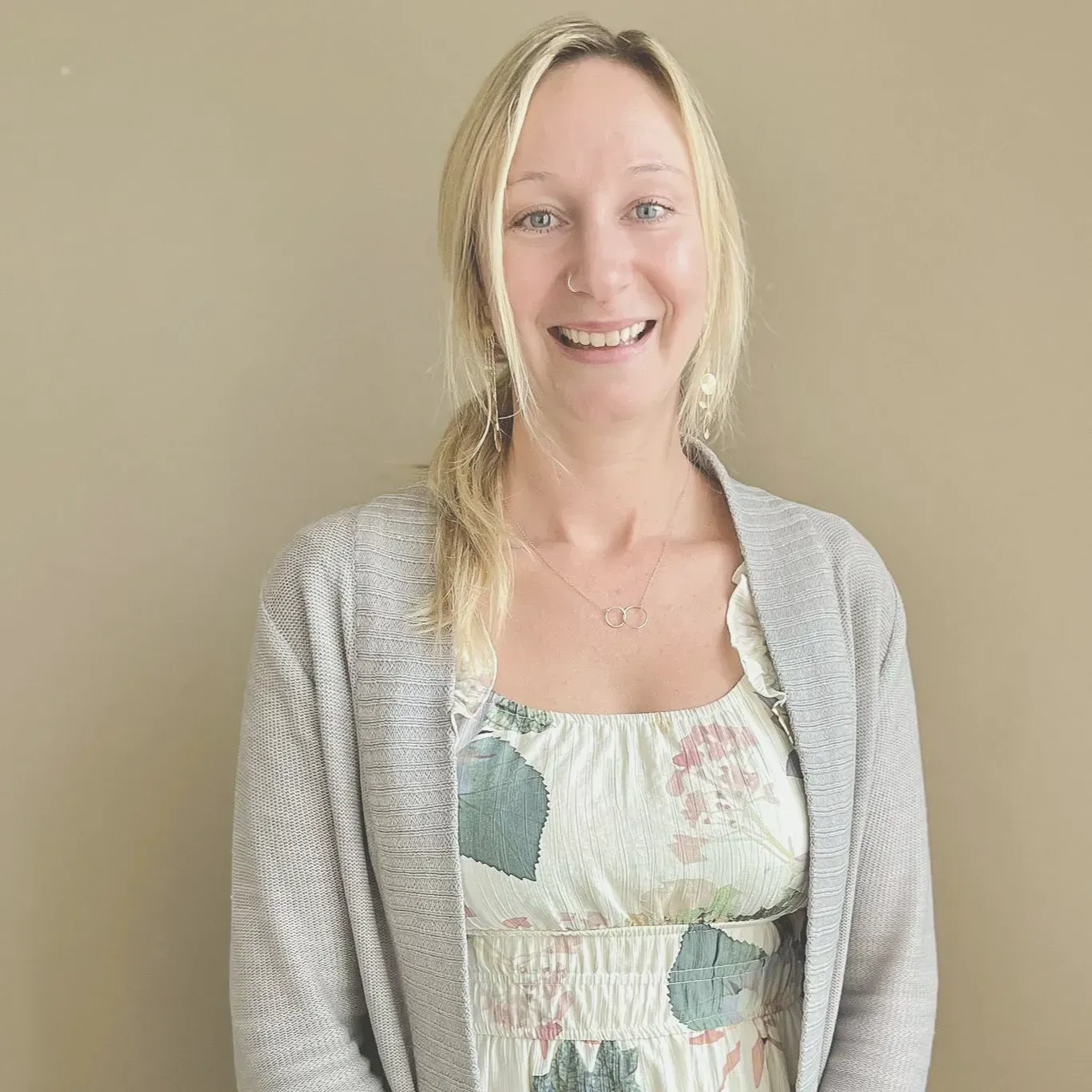
Leah Juras, RP — Grief, Pregnancy Loss and Life Changes
Leah Juras is a Registered Psychotherapist whose practice includes grief and loss, infertility, and pregnancy loss, alongside trauma, anxiety, and women's concerns. She draws on person-centred, trauma-informed, and attachment-based approaches, blending CBT, DBT, and ACT. Leah works with adolescents 14+ and adults.

Daniel Burgoyne, RP — Grief and Loss Counselling
Daniel Burgoyne is a Registered Psychotherapist who supports clients navigating grief and loss, anxiety and depression, relationships, chronic illness, and anger. His approach is collaborative and grounded, focused on helping clients work through the patterns that keep them stuck. Daniel works with adolescents, adults, and mature adults 65+.

Andi Atkins, RP — Grief, Trauma and Life Transitions
Andi Atkins holds a Master's degree in Counselling Psychology from McGill University and brings over ten years of clinical experience to her work. Her practice includes grief and loss, trauma, life transitions, and adolescent support. She offers in-person and telephone sessions for individuals 14 and up.
Grief Counselling in Barrie, Orillia and Across Simcoe County
We serve clients across the region — in person at our Barrie office and virtually throughout Ontario.
Barrie Office — 151 Essa Road, Suite 201
Our Barrie office is located at 151 Essa Road, Suite 201, in the Allandale neighbourhood near the Essa Road and Anne Street area. The office sits close to Highway 400, making it accessible from across the region. Free parking is available on-site. Whether you're coming in for a first session or returning regularly, the space is private, welcoming, and easy to reach.
Serving Orillia, Innisfil, Bradford, New Tecumseth and Simcoe County
Clients connect with Reset from Orillia, Innisfil, Bradford, New Tecumseth, and communities throughout Simcoe County — some in person, many by virtual session. If you're located outside Barrie and looking for grief counselling with a registered therapist, virtual appointments make access straightforward.
Virtual Grief Counselling Across Ontario
Virtual psychotherapy through Reset is available to clients across Ontario where clinically and regulatorily appropriate. Secure online sessions offer the same quality of care as in-person appointments. Many clients find the flexibility of virtual therapy makes it easier to show up consistently — particularly during a period of grief when getting out of the house can feel hard.
Grief Counselling at Reset — Registered, Local and Flexible Care
Our therapists are registered, experienced, and based in Barrie. Here's what that means for your care.
Registered Psychotherapists and Social Workers
Every clinician at Reset holds a regulated designation — Registered Psychotherapist (RP) or Registered Social Worker (RSW) — and is bound by professional and ethical standards. Our team pursues ongoing training and clinical supervision, which means your care reflects current, evidence-informed practice. You can find individual therapist credentials and regulatory registrations on their biography pages.
No Referral Needed and Clear Session Information
No referral is required to book with Reset. Sessions are $170 (no tax) for 50 minutes, with receipts provided for insurance purposes. Many extended health benefit plans include coverage for Registered Psychotherapists and Registered Social Workers — check your policy or contact your provider before booking to confirm your coverage and any documentation requirements.
Finding the Right Therapist Match
Finding the right therapist matters. We offer a Therapist Match Quiz to help you identify which clinician's approach, availability, and specialty aligns with what you're looking for. If you're unsure where to start, matching is a practical way to move from uncertainty to your first session.
Frequently Asked Questions About
Grief Counselling in Barrie
Common questions from people considering grief counselling at Reset.
What is grief counselling?
Grief counselling is a form of psychotherapy that provides professional support following bereavement, loss, or significant life change. It helps clients process grief, navigate difficult emotions, and adjust to a changed life. A grief counsellor doesn't tell you how to feel or when to stop grieving — they provide a structured, compassionate space to work through the experience at your own pace.
Is grief counselling only for someone who has died?
No. Grief counselling supports any kind of meaningful loss — the death of a loved one, but also divorce or separation, miscarriage and pregnancy loss, infertility, a serious illness, the loss of a job, a pet, a home, or an identity. If a change in your life has left you with persistent sadness, numbness, or a sense that the ground has shifted, counselling may help.
How long does grief counselling take?
It depends on the person, the circumstances, your goals, and your therapist's clinical assessment. Some clients find meaningful relief in a few sessions. Others benefit from longer-term support. We don't set a predetermined timeline. Your therapist will check in regularly to make sure the work continues to serve you.
Do I need a referral or diagnosis to see a grief counsellor?
No referral and no formal diagnosis is required to book at Reset. You can connect directly with any therapist whose approach and availability feel like a good fit. Some insurance plans may require a referral for reimbursement purposes — it's worth confirming with your provider before your first session.
How much does grief counselling cost in Barrie?
Sessions at Reset are $170 (no tax) for 50 minutes. This fee applies to individual counselling and is consistent across the grief therapists listed on this page. Receipts are provided, and many extended health plans include coverage for sessions with a Registered Psychotherapist or Registered Social Worker.
Is grief counselling covered by insurance in Ontario?
Many extended health benefit plans cover sessions with a Registered Psychotherapist (RP) or Registered Social Worker (RSW). Coverage varies by plan — some have annual maximums, some require specific designations, and some require a physician referral for reimbursement. We recommend confirming your therapist's designation and your plan's requirements before booking. Reset's insurance page has more detail on what to ask your provider.
Do you offer online grief counselling?
Yes. Virtual grief counselling is available to clients across Ontario through secure online sessions. Virtual appointments offer the same quality of care as in-person sessions and give clients the flexibility to access support from home. If in-person care at our Barrie office isn't accessible for you right now, virtual therapy is a full, supported option.
Book Grief Counselling in Barrie, ON
Reaching out during grief takes something. We're here when you're ready.
Find a Therapist Who Fits Your Needs
Our Registered Psychotherapists have supported clients through bereavement, pregnancy loss, relationship breakdown, trauma, and many other forms of grief. Sessions are available in-person at 151 Essa Road, Suite 201, Barrie — or virtually across Ontario. No referral needed. No pressure. Just a good therapist and a space that's yours.