
Childhood Trauma in Adults: Signs You Might Still Be Carrying It
We don't always know how our inner child is still hurting.
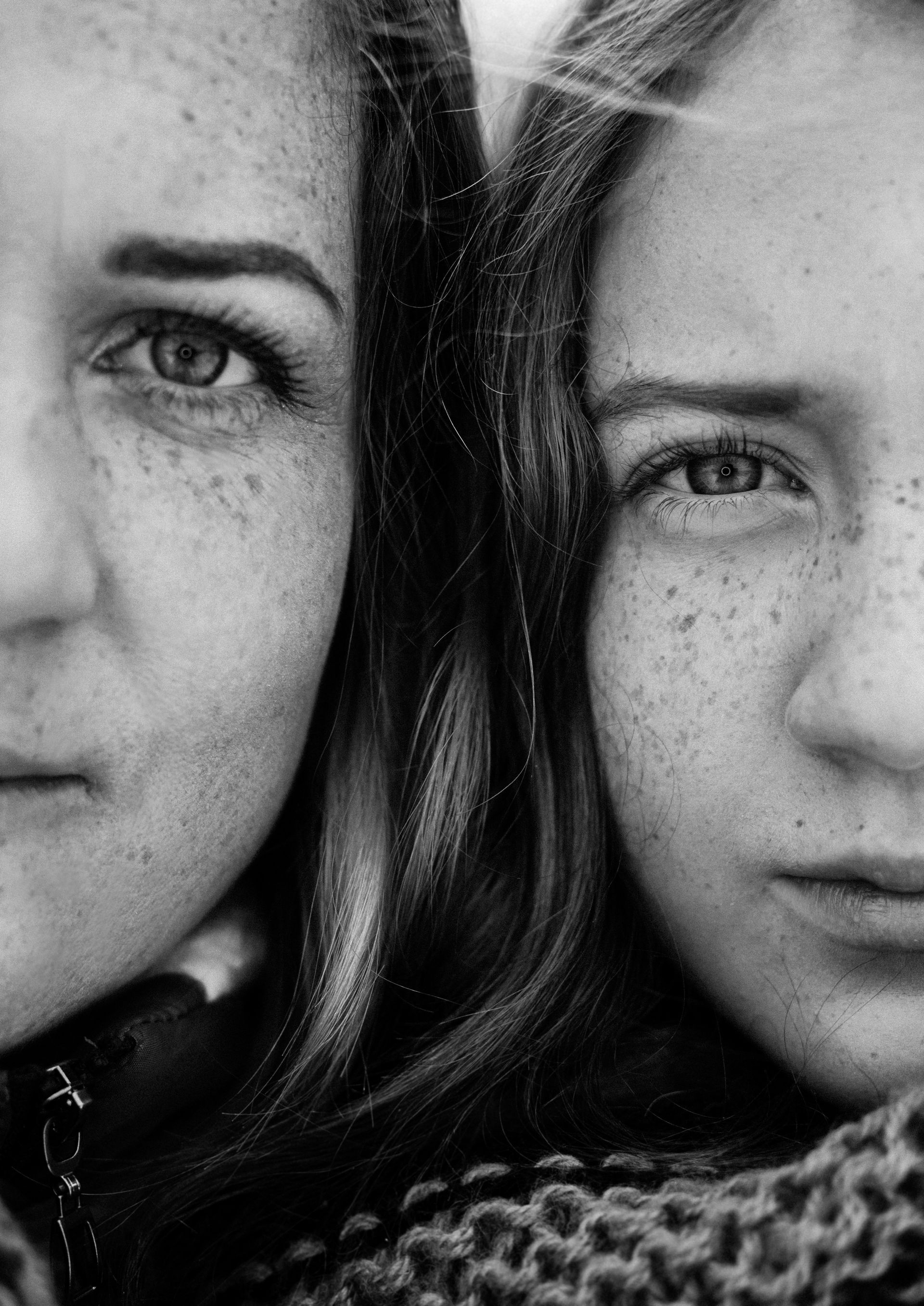
Most people who experienced difficult childhoods don't walk around thinking of themselves as trauma survivors. They think of themselves as people who had a hard time growing up, who learned to cope, who moved on. And in many ways they did. They built lives, formed relationships, figured out how to function.
But the body and the nervous system don't always get the memo that it's over. Childhood trauma has a way of staying present long after the circumstances that caused it have changed, showing up not as vivid memories but as patterns, reactions, and ways of moving through the world that were formed in response to environments that required them.
If some of what follows resonates, that recognition matters. Not as a diagnosis, and not as a reason to feel broken, but as information worth paying attention to.
What Counts as Childhood Trauma
This is worth addressing early, because one of the most common reasons people don't connect their adult struggles to their childhood is that they don't think what happened to them was serious enough to count.
Trauma isn't defined by the severity of what happened on an objective scale. It's defined by how the nervous system responded to it. Experiences that were overwhelming, unpredictable, or that left a child feeling unsafe, unseen, or alone can be traumatic even when they don't fit the dramatic picture most people have in mind.
That includes obvious things like abuse, neglect, and household violence. It also includes things that are harder to name: growing up with a parent who was emotionally unavailable, inconsistent, or struggling with their own mental health or addiction. A childhood marked by chronic instability, loss, or not having your emotional needs consistently met. Being bullied relentlessly. Losing a parent or sibling at a young age. Living in an environment where you never quite felt safe or like you belonged.
None of these experiences require a label to have left a mark. And the mark doesn't always look like what people expect.
Signs Childhood Trauma May Still Be Affecting You
You react to certain situations with intensity that surprises even you
One of the most recognizable signs of unresolved childhood trauma is a response that feels out of proportion to what's actually happening in the present moment. A comment from a partner that sends you into a spiral of shame. A raised voice that makes you freeze. A sense of panic when someone doesn't respond to a message quickly. Conflict that feels, in your body, like the end of something.
These reactions aren't overreactions. They're the nervous system responding to the present through the lens of the past, treating a current situation as though it carries the same threat level as something that happened decades ago. The trigger is real. The intensity belongs to something older.
You struggle with trust, even when there's no reason not to
When childhood involved people who were supposed to be safe but weren't, the nervous system learns something it doesn't easily unlearn: closeness is risky. That learning shows up in adult relationships as difficulty trusting even reliable people, waiting for things to go wrong, keeping emotional distance as protection, or feeling profoundly unsettled when a relationship feels too good to be true.
Some people with this pattern push others away before they can be left. Others stay in relationships that confirm what they already believe about how they'll be treated. Neither is a character flaw. Both are adaptations to early experiences that made sense at the time.
You have a persistent sense of not being good enough
Childhood trauma, particularly when it involved emotional neglect, criticism, or unpredictable caregiving, tends to produce deeply held beliefs about the self. Not conscious conclusions, but underlying operating assumptions that run quietly in the background: that you are too much, not enough, fundamentally flawed, or not deserving of the good things other people seem to have.
These beliefs feel like facts. They don't present as interpretations that can be examined and challenged. They show up as the inner voice that undermines your confidence at work, the feeling of waiting to be found out, the difficulty receiving genuine care without deflecting it, the exhausting work of performing okayness while feeling something very different underneath.
You find it hard to feel safe in your own body
Chronic childhood stress leaves a physiological imprint. Many adults who experienced early trauma describe a baseline level of tension that never quite releases, difficulty relaxing even in environments that are objectively safe, sleep that is light or disrupted, or a body that feels like it's always slightly braced for something. Digestive issues, chronic pain, and autoimmune conditions are also more common in people with significant early adversity, reflecting the long-term cost of a nervous system that spent years in survival mode.
Some people cope with this by disconnecting from their body entirely, finding it easier to live from the neck up than to be present in physical sensation. That dissociation was useful once. Over time it becomes its own source of difficulty.
Your relationships follow recognizable patterns
The attachment patterns we develop in childhood become the templates we carry into adult relationships. When early attachment was secure, people tend to move through adult relationships with a reasonable degree of trust and flexibility. When early attachment was inconsistent, frightening, or absent, those patterns show up too.
This might look like being drawn to people who are emotionally unavailable, recreating dynamics that feel familiar even when they're painful, or having difficulty maintaining relationships even with people who are genuinely good to you. It might look like being fiercely self-sufficient to the point of not being able to let anyone in. Or like oscillating between intense closeness and sudden withdrawal when vulnerability feels like too much.
These patterns don't mean something is wrong with you. They mean your nervous system is doing what it learned to do to stay safe. They also mean there's something specific to work with.
You've been treating the symptoms without addressing the source
A lot of people with unresolved childhood trauma have spent years managing anxiety, depression, relationship difficulties, or low self-worth without the underlying cause ever being clearly identified or addressed. They've tried things that helped a little but never fully resolved anything. They've been in therapy that felt useful but incomplete. They've gotten good at coping in ways that keep them functional but don't actually change much at the level where it matters.
That experience isn't evidence that nothing can help. It's often evidence that the work hasn't yet reached the right level. Childhood trauma, particularly when it was chronic and relational, often needs a specific kind of approach rather than general support.
What Healing Actually Looks Like
It doesn't look like forgetting what happened, or reaching a point where it no longer matters, or arriving at forced forgiveness for people who caused real harm. Those are not the goals.
What healing tends to look like is a gradual shift in the relationship between you and your history. The memories become less intrusive. The reactions become less overwhelming. The beliefs about yourself become less fixed. Relationships start to feel less dangerous. The body begins to settle into something closer to ease.
That process is slower than most people want it to be, and it's rarely linear. But it is real, and it happens more often than many people who have been carrying this for a long time believe is possible for them specifically.
Good trauma therapy creates the conditions for that shift. Not by pushing through the past as quickly as possible, but by building enough safety and internal resource that the deeper work can actually be done without retraumatizing in the process. Approaches like EMDR, IFS, somatic therapy, and CPT each offer different ways in, and a skilled therapist will help you figure out what combination fits where you are and what you're carrying.
Childhood Trauma Therapy in Barrie
At Reset Counselling & Psychotherapy, our registered psychotherapists offer trauma and PTSD counselling for adults working through the long-term effects of childhood experiences. We use trauma-informed, evidence-based approaches including EMDR, IFS, CPT, CBT, and somatic therapy, in person at our Barrie location and virtually across Ontario.
You don't need a formal diagnosis to reach out, and you don't need to be certain that what you experienced qualifies as trauma. If something resonated in what you read here, that's enough to start a conversation.
Book a session with our Barrie trauma therapy team →
Reset Counselling & Psychotherapy is located at Unit 201-151 Essa Road, Barrie, ON. We offer trauma therapy, PTSD counselling, and a full range of mental health services, in person and virtually across Ontario.