
Therapy for Men in Barrie, ON
You don't need to have everything figured out before reaching out. At Reset Counselling & Psychotherapy, we work with men navigating stress, anger, anxiety, depression, relationship difficulties, trauma, grief, and major life transitions. Our team of mental health professionals provides confidential, in-person therapy for men in Barrie and virtual sessions across Ontario.
Therapy at Reset Counselling & Psychotherapy is practical and collaborative — shaped around who you are and what you're working through, not a scripted version of what men are "supposed" to bring to therapy.
Registered Psychotherapists (RPs) providing Men's Therapy · Serving Barrie since 2016 · In-person and virtual appointments
· Evenings available · $170 per 50-minute session · No doctor's referral required
Is Therapy for Men Right for You?
When Everything Looks Fine on the Outside but Doesn't Feel Fine
Sometimes the issue isn't visible. You're showing up to work, managing your responsibilities, and keeping things together for the people around you — but something is off.
Maybe you're exhausted in a way that sleep doesn't fix. Maybe you're irritated more often than you'd like to admit, or you've been quietly withdrawing from your partner or friends without being able to explain why. Perhaps the low feeling isn't dramatic sadness — it's a dull numbness that's hard to name.
You might be working longer hours than necessary, staying busy to avoid thinking, or using alcohol, gaming, or other habits to take the edge off. The weight of carrying everyone else's needs is real. And so is that quiet sense that something needs to change, even when you can't say exactly what.
Signs It May Be Time to Talk With a Therapist
Therapy tends to help most when problems keep repeating despite genuine effort to solve them alone. A few signs worth paying attention to:
- Stress is affecting your sleep, your work, or your closest relationships
- Anger is creating regret you can't shake
- You feel increasingly detached from your family or partner
- Anxiety or low mood has been persisting for weeks or longer
- A significant change — a breakup, divorce, job loss, becoming a father, or a bereavement — has left things feeling unstable
- Past experiences continue to shape how you react in the present
- You want to understand yourself more clearly before a crisis forces you to
The timing doesn't have to be urgent for therapy to be worthwhile.
What Men Come to Therapy For
01
Stress, Burnout, Career Pressure and Responsibility
Work deadlines, financial pressure, parenting demands, caregiving — men often manage stress from multiple directions at once, with little space to process any of it. Over time, that accumulation affects sleep, decision-making, and the people closest to you. Therapy helps build coping strategies that hold up in real daily life.
02
Anger, Irritability and Emotional Regulation
Anger is often the first emotion to surface when other feelings — hurt, fear, shame, overwhelm — haven't had room to be expressed. If your triggers feel unpredictable, if conflict keeps escalating, or if impulsivity is creating consequences you regret, therapy can help you understand what's underneath and develop communication and coping skills that give you more control. Learn more about our
anger management counselling.
03
Anxiety, Depression and Feeling Disconnected
In men,
anxiety and
depression often present differently than they do in women — more irritability, more isolation, more numbing out than obvious distress. Persistent worry, low mood, self-criticism, or a creeping social withdrawal are all worth taking seriously. A therapist familiar with how men experience these concerns will recognise the signs and work with you accordingly.
04
Relationships, Communication and Intimacy
Whether it's recurring conflict with a partner, communication that keeps breaking down, or a relationship that has reached a real breaking point, therapy creates space to look honestly at what's happening and why. We offer both individual and
couples counselling for men navigating relationship challenges, separation, divorce, trust issues, or the transition into fatherhood.
05
Trauma, Grief, Self-Worth and Major Life Changes
Carrying unprocessed experiences — childhood trauma, loss, a destabilising life transition — has a way of shaping behaviour long after the original event.Trauma and PTSD therapy, grief counselling, and work around self-esteem and identity can help you make sense of those patterns and move forward with greater stability. Whether you're navigating bereavement, a career shift, retirement, or a changed sense of who you are, therapy provides a structured space to work through it.
What Therapy for Men at Reset Is Actually Like
Practical, Collaborative and Goal-Focused
Therapy at Reset starts with a shared understanding of what you want to work on. From there, sessions might involve identifying the root causes of recurring problems, setting clear goals, building practical skills, and understanding the patterns that keep showing up at work, at home, or in your relationships.
A Non-Judgmental Therapy Space Without Pressure to Perform
You don't need the right words. You don't need to arrive with a structured account of your problems or a clear sense of what you're hoping to achieve.
Some men come in knowing exactly what they want to work on. Others simply know that something isn't right and need space to figure it out. The pressure to appear self-reliant, strong, or entirely "in control" — that pressure doesn't need to follow you into the room. Our therapists are experienced in working with men who haven't had many opportunities to speak openly, and they meet that honestly with warmth rather than evaluation.
What Progress Can Look Like
Therapy doesn't produce the same result for everyone, and we won't make promises we can't keep. That said, clients often work toward:
- Recognising triggers earlier, before they escalate
- Responding to difficult situations rather than reacting automatically
- Communicating more directly with partners, family, or colleagues
- Feeling less overwhelmed by responsibilities
- Understanding patterns that have been repeating for years
- Handling conflict with more steadiness
- Feeling more connected — to themselves and to the people they care about
Progress tends to be gradual. It's also real.
Therapy Approaches We May Use
Meet Reset Therapists Who Work With Men's Concerns

Lindsay Tsang, Registered Psychotherapist
Lindsay works with men facing depression, anger, social anxiety, and couples/relationship challenges. Lindsay brings clinical experience and a genuine commitment to helping clients find a therapist they trust and want to stay with.
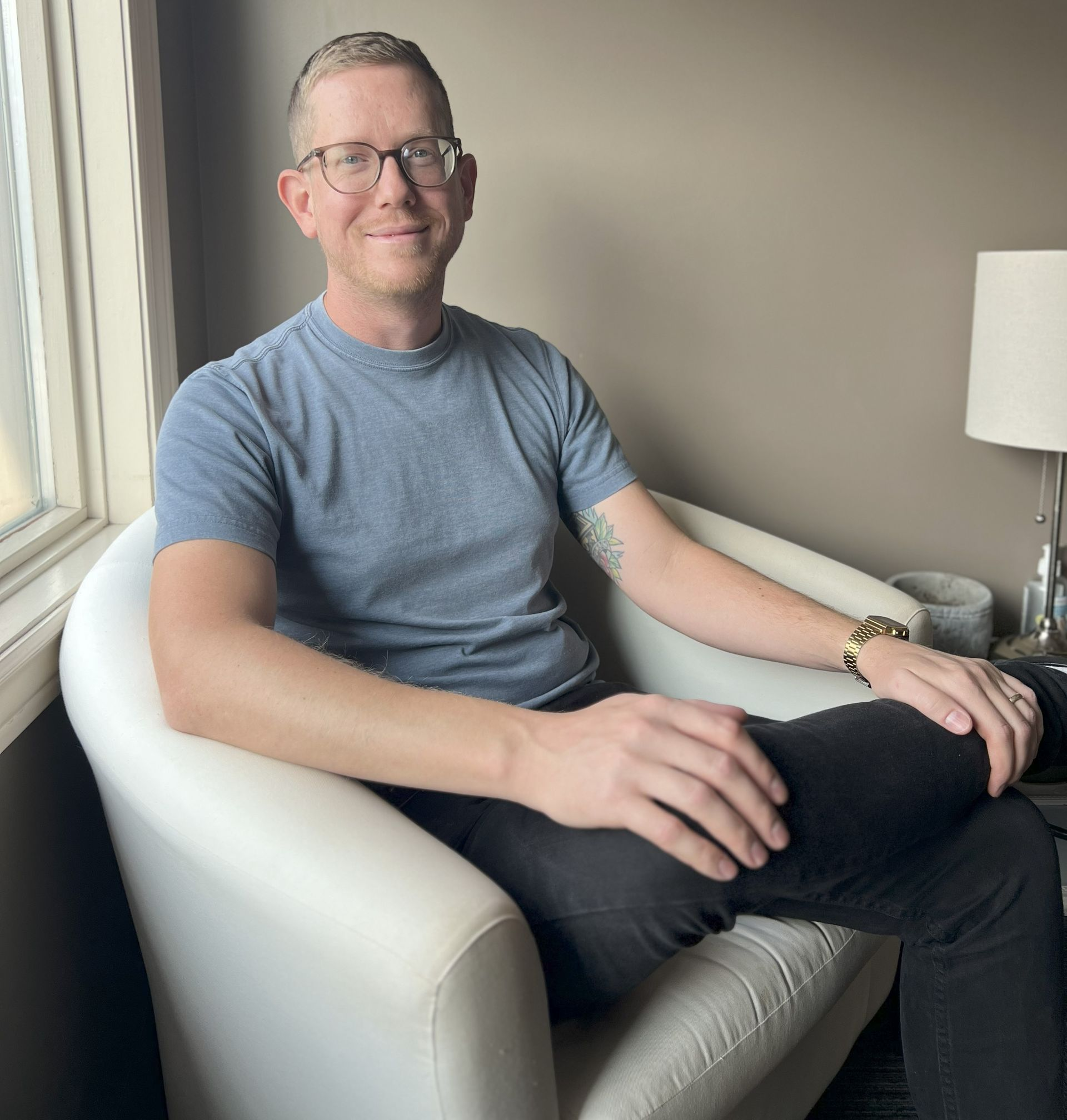
Daniel Burgoyne, Registered Psychotherapist
Daniel works with men navigating relationship difficulties, grief and loss, anxiety, depression, and anger. Clients describe his style as collaborative and practical — a therapist who listens carefully and works alongside you to develop strategies that fit your actual life and circumstances.

Van Shanahan, Registered Psychotherapist
Van Shanahan works specifically with men's concerns, including anger and relationship challenges, anxiety, depression, and unhealthy coping patterns. His approach is practical, collaborative work oriented around real-life change.

Craig Head — Men's Concerns, Anger and Relationships
Craig Head works with men navigating anger, relationship strain, stress, and major life transitions. His approach is grounded in empathy, trust, and genuine connection. Craig is well-suited for men who want a steady, experienced presence.
Where You Can Access Men's Therapy with Reset Counselling & Psychotherapy
Men's Therapy In Person at Our Barrie Office
Our Barrie office is located at Unit 201–151 Essa Road in the Allandale neighbourhood, at the Essa Road and Anne Street South intersection with direct access from Hwy 400 and free parking on site.
Virtual Therapy to Fit Your Lifestyle
Clients come to Reset from Barrie and communities throughout Simcoe County, including Orillia, Innisfil, Bradford, New Tecumseth, and the broader surrounding area. For men who prefer not to travel, or whose schedules make in-person attendance difficult, virtual psychotherapy is available across Ontario.
Cost, Insurance and Booking Men's Therapy
How Much Does Therapy for Men Cost?
Sessions at Reset are $170 for 50 minutes, with no additional tax. That rate applies to both individual and couples sessions. The frequency and duration of therapy depends on your goals and progress.
Does Insurance Cover Psychotherapy?
Many extended-health benefit plans include coverage for registered psychotherapy or social-work services. Coverage varies by plan and employer, so please check before booking. Most of our team hold Registered Psychotherapist (RP) designations through CRPO. Reset provides receipts for all sessions through your JaneApp profile. We do not currently offer direct billing — reimbursement is handled directly between you and your insurance provider.
Do I Need a Referral and How Do I Book?
No referral is required. You can book directly through our
JaneApp online booking page. If you're unsure which therapist is the right fit, our Therapist Matching Quiz walks you through a few short questions and connects you with an appropriate match.
What to Expect in Your First Therapy Session
Before Your Appointment
Once you've booked through JaneApp, you'll receive intake paperwork to complete before your first session. No special preparation is required — you don't need notes, a plan, or a clear articulation of the problem. Your therapist will guide the conversation. You'll also be asked to confirm your preferred format: in-person at our Barrie office, or virtual.
During the First Session
Your first session is an intake. Your therapist will ask what brought you in, what's been difficult lately, and what you're hoping to get out of therapy. You'll have space to share relevant history where it feels useful. Together, you and your therapist will begin to identify priorities and outline a possible direction for the work ahead. You're not expected to disclose everything immediately — the pace is yours to set. Questions are welcome at any point.
After the Session — Therapist Fit and Next Steps
Therapeutic fit matters. If the first session doesn't feel quite right, that's useful information — not a failure. You're welcome to explore other therapists on our team, browse therapist profiles, or use our Therapist Matching Quiz to find a better match. The goal is a therapeutic relationship you actually want to stay in.
Frequently Asked Questions About Therapy for Men in Barrie
Do I Need a Male Therapist for Men's Therapy?
Not necessarily. Some men prefer working with a male therapist, while others care more about communication style, therapeutic approach, experience, or personality. What matters most is finding a therapist you feel comfortable working with.
What If I Don't Know What to Talk About in Therapy?
That's more common than you'd think, and it's not a problem. Your therapist's job is to help you figure out what you're experiencing, not to wait for you to arrive with a prepared agenda. Many men start therapy with a vague sense that something is off — and that's a completely workable starting point. You'll find your way into the conversation.
Will I Have to Talk About My Childhood?
Not automatically. The focus of therapy is determined collaboratively based on your goals and what's clinically relevant to what you're working through. Some men find that exploring earlier experiences is genuinely useful. Others do entirely present-focused work. Your therapist will follow your lead and explain the rationale for any direction they suggest.
How Long Does Therapy Usually Take?
Duration varies depending on your goals, the concern you're working on, how often you attend, and how things progress. Some clients attend for a focused stretch of 6–10 sessions; others benefit from longer-term support. Reset's FAQ notes that most clients working through a specific concern attend at least 8–12 sessions. Your therapist will check in with you regularly to make sure the work is moving in the right direction.
Is Therapy Confidential?
Yes. Everything discussed in sessions is confidential. Your therapist will review the specific limits and exceptions to confidentiality — such as situations involving imminent safety concerns — during the intake process. If you're attending virtual sessions, Reset uses a secure platform that meets professional privacy standards.
Can I Do Therapy Online If I Live Outside Barrie?
Yes. Reset offers virtual psychotherapy for clients across Ontario. If you're in Orillia, Innisfil, Bradford, New Tecumseth, or elsewhere in the province, online sessions are a fully supported option. Please note that virtual services are available within Ontario; coverage in other provinces depends on the individual clinician's registration.
Start Therapy for Men at Reset Counselling & Psychotherapy
Our Registered Psychotherapists in Barrie are ready to work with you — in person or virtually across Ontario. You don't need to be in crisis, and you don't need to have it all figured out. Choose a therapist whose approach feels right, or use our matching quiz to get a recommendation. Either way, the first step is a simple one.
When You Need Immediate Mental Health Support
Scheduled psychotherapy at Reset is not a crisis or emergency service. If you or someone you know is in immediate danger or experiencing an acute mental health emergency, please call 911 or dial 211 in Simcoe County to connect with a crisis worker right away. For community mental health support, 211 can also connect you with local resources including CMHA and other agencies serving the Barrie area.