
PTSD Therapy for First Responders: Getting Support That Actually Goes Deep
When it's your job to respond to traumatic events, it can pile up.. But who's helping you?
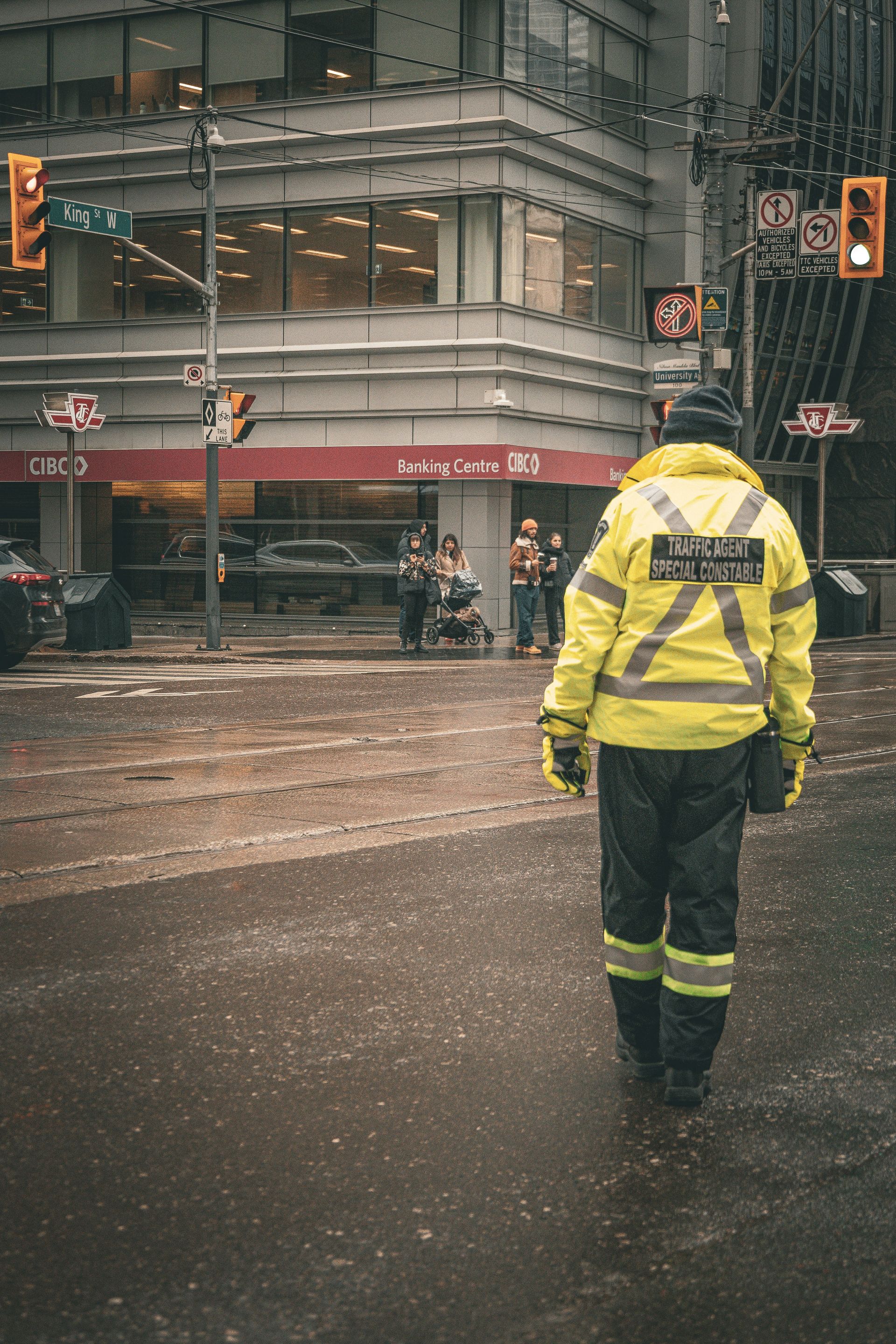
First responders don't talk about what they carry. That's not a criticism — it's a culture, and it developed for understandable reasons. The ability to compartmentalize, to show up and do the job regardless of what happened on the last call, to maintain composure when everything around you is falling apart — these aren't just professional skills. They're survival adaptations that make the work possible.
The problem is that compartmentalization has a capacity. And for many first responders — paramedics, firefighters, police officers, dispatchers, ER nurses — the weight of what accumulates over years of exposure to trauma, loss, violence, and human suffering eventually exceeds it.
When that happens, the strategies that kept things functional stop working. And what's been held at bay starts coming through.
What First Responder PTSD Actually Looks Like
PTSD in first responders doesn't always present the way people expect. The dramatic flashback, the obvious breakdown — those happen, but they're not the most common presentation. More often, what shows up is subtler and more diffuse, which is part of why it gets missed or minimized for so long.
Hypervigilance that doesn't turn off. A level of alertness and threat-monitoring that was appropriate on shift and now follows the person into every other area of their life — into family dinners, into sleep, into situations that are objectively safe. The nervous system that was trained to scan for danger doesn't have an off switch.
Sleep that won't settle. Difficulty falling asleep, waking in the night, nightmares that replay calls or incidents in ways that the waking mind has managed to keep at a distance. The sleeping brain doesn't always have the same defences.
Emotional numbing and detachment. The disconnection from feeling that developed as a way of doing the job starts to generalize — making it harder to be present with a partner, to enjoy things that should feel good, to access the parts of life that exist outside of work. Relationships carry the weight of someone who is physically present and emotionally elsewhere.
Irritability and reactivity that doesn't match the situation. A short fuse with family. Overreaction to minor frustrations. Anger that arrives faster and more intensely than it used to and seems disproportionate to what triggered it.
Increased use of alcohol or other substances. For many first responders, substances become the most accessible tool for managing what's accumulated — bringing down the activation enough to sleep, numbing what can't otherwise be quieted. It works in the short term. Over time it becomes its own significant problem.
Withdrawal from colleagues, from family, from the social connections that used to matter. The person becomes harder to reach — more isolated, more self-contained, less willing to talk about anything real.
These patterns don't always arrive together or all at once. They accumulate gradually, often over years, in ways that are easy to explain away individually. It's just a rough stretch. Work has been particularly bad lately. I'll be fine once things slow down.
Things rarely slow down.
Why First Responders Wait So Long to Get Help
The barriers to seeking mental health support in first responder culture are real and significant, and it's worth naming them directly rather than simply encouraging people to reach out without acknowledging what that actually asks of them.
The stigma is still present, even as it has begun to shift. Seeking therapy in environments where strength and stoicism are core professional values can feel like an admission of weakness, or a career risk, or a betrayal of the identity built around being the person who handles things. The same attributes that make someone good at the job — self-reliance, high threshold for distress, the capacity to push through — are the same attributes that make it hard to ask for help.
There's also a specific kind of minimization that's almost universal in first responder PTSD: the comparison to people who have been through worse. I've seen colleagues deal with more than this. Other people have it harder. I don't have the right to struggle. The logic sounds like humility. It functions as a barrier between a person and the support they need.
And for many first responders, the previous attempts at getting help haven't worked particularly well. A few sessions with a therapist who didn't understand the job, who was visibly overwhelmed by what was being described, or who offered generic coping strategies that had no relevance to the actual demands of first responder life — these experiences confirm the suspicion that therapy isn't for people like them.
That last point matters, because the answer to it isn't to stop seeking help. It's to find the right help.
What the Right Help Actually Looks Like
Kyleigh Wells, Registered Nurse and psychotherapist at Reset Counselling & Psychotherapy, was raised by first responders and has spent years working in acute clinical environments. She understands what the job asks of people — not from the outside, but from the inside of a life shaped by that world. That context shapes everything about how she approaches the work.
She's clear about what effective support for first responders actually requires: "So many of the therapies and treatments that people are getting are a bandaid solution. Seeing a therapist is a long term solution. We can use evidence-informed therapies to help you recover and get back to the person that you were before all of this happened."
That distinction — bandaid versus genuine recovery — is one worth sitting with. Managing symptoms, developing better coping strategies, learning to keep things functional — these have value. They're also not the same as actually processing what's happened, reducing the underlying load the nervous system is carrying, and building something sustainable rather than just keeping the lid on.
What that deeper work actually involves depends on the person and what they're carrying. But a few approaches have particularly strong evidence for first responder PTSD.
Evidence-Based Approaches That Work
Cognitive Processing Therapy was developed specifically for PTSD and has a strong evidence base in first responder and military populations. It focuses on the beliefs that trauma creates and maintains — about safety, trust, control, and self-worth — and works systematically to examine and update them. For first responders who have developed beliefs like "the world is fundamentally dangerous," "I can't protect the people I care about," or "something is wrong with me for being affected by this," CPT addresses those beliefs directly rather than managing the symptoms they produce.
EMDR is particularly effective for processing specific traumatic incidents — the calls that stuck, the scenes that replay. The bilateral stimulation that characterizes EMDR appears to help the brain metabolize traumatic memories in a way that reduces their emotional charge without requiring the person to talk through every detail of what happened. For people who are reluctant to verbally recount traumatic experiences, EMDR offers a different pathway through the material.
Trauma-informed CBT helps identify the thought patterns and avoidance behaviours that maintain PTSD symptoms and builds more adaptive ways of responding. The practical, skills-based orientation of CBT tends to suit many first responders well — it has a structure and a direction that feels purposeful rather than open-ended.
Somatic approaches address what PTSD does to the nervous system and the body — the chronic hyperactivation, the physical tension, the sleep disruption, the way the body stays in a state of readiness that was appropriate on shift but is costly everywhere else. Working at the level of the nervous system rather than only through cognitive approaches often reaches things that talk alone doesn't.
Moral Injury: The Piece That Often Gets Missed
PTSD captures a significant part of what first responders experience, but not all of it. Moral injury — the damage done when a person acts in ways that violate their own moral code, or witnesses others doing so, or feels betrayed by leadership or the institution they serve — is a distinct and important dimension of first responder suffering that standard PTSD frameworks don't always address adequately.
The paramedic who couldn't save someone they were certain they could save. The firefighter who followed orders that led to an outcome they'll never be at peace with. The police officer who witnessed something done in the name of the institution that conflicted fundamentally with why they joined. These experiences produce guilt, shame, and a disillusionment that sits differently from fear-based trauma and needs to be addressed differently.
Effective therapy for first responders holds the full picture — the fear-based trauma, the moral injury, the grief for colleagues lost and for the person the first responder was before the job changed them. None of it is incidental. All of it deserves space.
The Family Carries It Too
One of the least discussed dimensions of first responder PTSD is its impact on family members — partners, children, and parents who live in close proximity to someone whose work has changed them in ways that are hard to name and hard to address.
Partners describe living with someone who is present and unreachable at the same time. Children absorb the tension without having language for it. Families reorganize themselves around the emotional availability of the first responder in ways that become their own pattern over time.
Individual therapy for the first responder is often the most important first step. Support for the family alongside it — and sometimes couples therapy as part of the recovery process — tends to produce outcomes that are more durable, because the relational system is part of what's been affected and needs to be part of what heals.
You Don't Have to Wait Until You Can't Function
One of the most consistent things first responders say when they eventually seek support is that they waited too long. Not because they didn't know something was wrong, but because the threshold for what counted as "wrong enough" kept shifting as things got worse.
The time to seek support isn't when functioning has collapsed. It's when you notice the pattern starting to form — the sleep that's changed, the reactions that don't match the situation, the growing distance from the people and things that matter. Getting help earlier means less time carrying more than necessary, and a faster path back to the person you were before the weight accumulated.
The work is possible. Recovery is real. And the version of yourself that existed before all of this is closer than it might feel right now.
First Responder PTSD Therapy in Barrie
At Reset Counselling & Psychotherapy, Kyleigh Wells offers trauma and PTSD therapy specifically for first responders, healthcare workers, and caregivers. As a Registered Nurse with active clinical experience and a personal connection to the first responder world, she brings both the clinical expertise and the genuine understanding of the culture that makes the work feel relevant rather than generic.
She uses CPT, EMDR, CBT, and trauma-informed approaches, adapted to the specific demands of first responder trauma and moral injury. In person at our Barrie location and virtually across Ontario. No referral needed.
Reset Counselling & Psychotherapy is located at Unit 201-151 Essa Road, Barrie, ON. We offer trauma therapy, PTSD counselling, and a full range of mental health services, in person and virtually across Ontario.