
Trying Online Therapy: How to Set Yourself Up for Success
Maybe walking into a therapist office isn't your thing.. That's okay, we have options :)
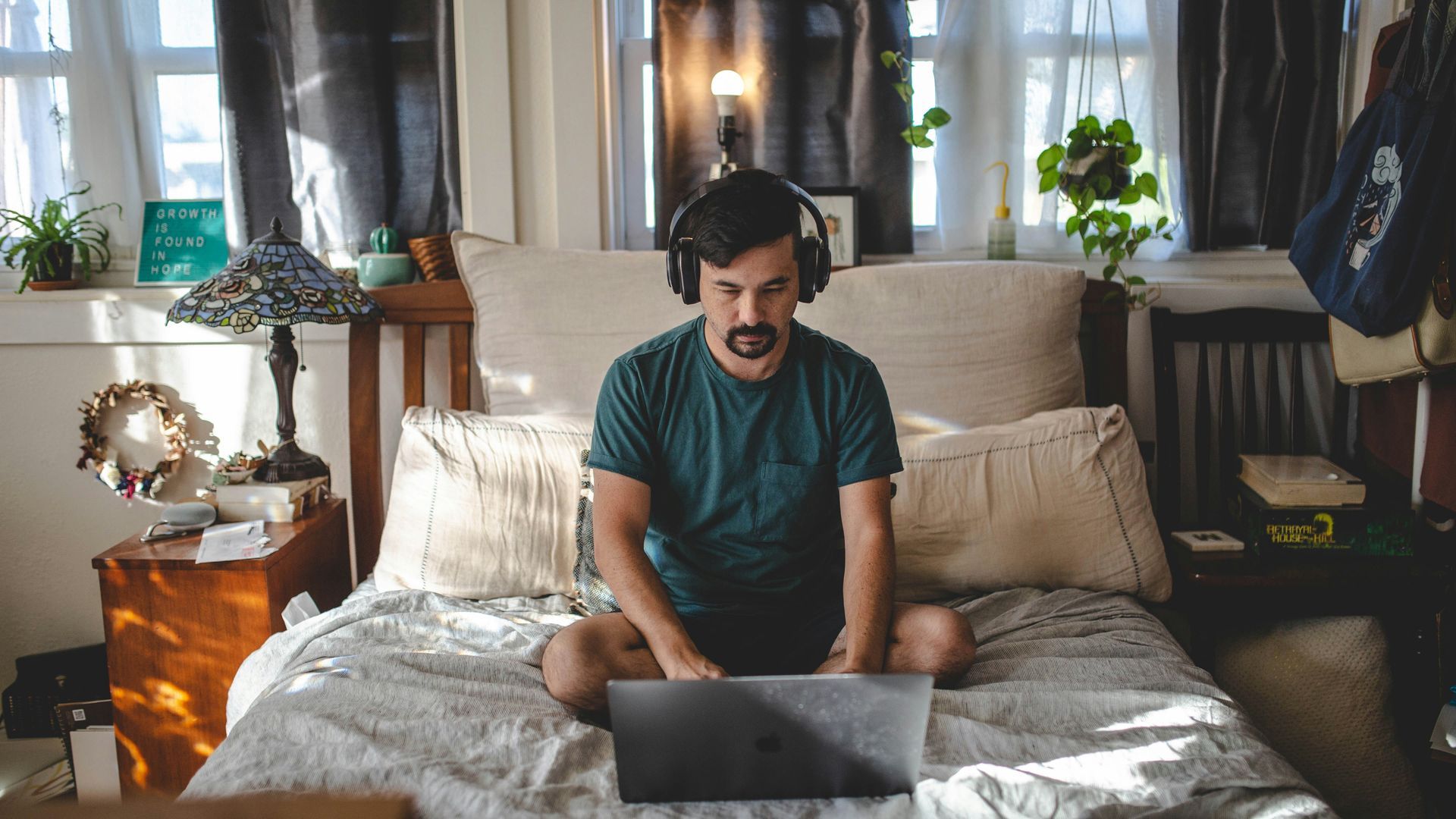
Booking your first therapy session is a big step. Booking it online adds a layer of small, practical questions. Where do I sit? What if my Wi-Fi drops? Can my roommate hear me? Do I have to look at myself on screen for fifty minutes?
If you’re feeling a little unsure, you’re in good company. Most people are nervous before their first online session, and most say afterward that it was easier than they expected. A bit of preparation makes it smoother, though, and it helps you spend your time on what matters: the actual work.
Here’s how to set yourself up well.
Does online therapy actually work?
Yes. For most common concerns, including anxiety, depression, stress, grief, and relationship difficulties, research finds online therapy produces results comparable to in-person sessions. The thing that matters most in therapy is the relationship between you and your therapist, and that can absolutely develop through a screen.
Online therapy also removes some real barriers. There’s no commute, no waiting room, and it’s easier to fit around work, kids, and winter roads. For people who feel anxious about walking into an unfamiliar office, starting from home can make taking that first step much easier.
That said, a few small choices can make the difference between a session that feels scattered and one that feels settled. That’s what the rest of this is for.
Find a private space (and make it feel safe)
This is the single biggest factor. You want a spot where you can talk openly without worrying who might hear.
- Choose a room with a door that closes. A bedroom, home office, or spare room all work.
- Let the people you live with know. A simple “I have an appointment from 4 to 5 and I’d like some quiet” is enough. You don’t have to explain what it’s for.
- Cover the sound. A white noise machine, a fan, or music playing softly outside the door helps. A towel along the bottom of the door works too.
- Don’t have the session in public. Cafés, shared offices, and parked cars outside work all make it hard to speak freely, and they’re not private.
- Avoid driving. Therapy is not something to do behind the wheel, for safety and focus.
If privacy at home is genuinely hard, you have options. Some people use a parked car in a quiet spot, take the session on a phone call while walking somewhere private, or arrange a time when the house is empty. If it’s an ongoing challenge, mention it to your therapist. They hear this all the time and can help you find a workable solution, and in-person sessions may be an option too.
Do a quick tech check
A few minutes of prep can prevent a lot of stress.
- Test your internet. A stable connection matters more than anything. If your Wi-Fi is spotty, sit closer to the router or plug in directly.
- Charge your device, or keep it plugged in.
- Check your camera and microphone. Make sure the app has permission to use both.
- Use headphones if you can. They improve sound quality and add a bit of privacy, since others can’t hear your therapist’s voice.
- Prop your device up. A laptop on a table or a phone on a stand is better than holding it for an hour.
- Close other apps and silence notifications. Put your phone on Do Not Disturb.
- Log in a few minutes early. That gives you time to fix any hiccups without eating into your session.
Before your first appointment, you’ll usually get a link and some intake paperwork through your therapist’s booking system. Filling the forms out ahead of time means your first session can be spent talking, not on admin.
Plan for the “what ifs”
A little backup planning takes the edge off.
If your connection drops: it happens. Rejoin the link, and if that doesn’t work, your therapist may call you by phone or reschedule. Ask at the start how they handle it, so you’re not guessing in the moment.
If you’re interrupted: kids, pets, and doorbells are part of real life. A quick “sorry, one second” is completely fine, and your therapist will have seen it all.
If you feel overwhelmed during the session: you can say so. You can pause, turn off your camera for a moment, take a breath, or take a break. You’re in control of the pace.
If you can’t see how it’s going: it’s okay to ask your therapist directly, “How do you think this is going?” or “Can we check whether this feels like a good fit?”
Set up your space for comfort
You’re going to be doing something emotionally demanding, so make the physical part easy.
- Sit somewhere comfortable, but not so cozy you’ll feel sleepy or distracted. A supportive chair or the corner of a couch works.
- Have the camera at about eye level, with decent light on your face, such as a lamp or window in front of you rather than behind.
- Keep a glass of water, tissues, and a notebook close.
- Wear what’s comfortable. You don’t have to dress up.
- Bring something grounding if it helps, like a blanket, a warm drink, or a small object to hold.
- Silence your environment. Turn off the TV, and close extra tabs.
You don’t need to create a perfect set. Just remove the things most likely to pull your attention away.
Give yourself a buffer before and after
This one gets overlooked, and it makes a big difference.
Before: try not to squeeze your session in between meetings or chores. Even ten minutes beforehand lets you settle, grab water, and arrive in the right headspace. Jumping straight from a stressful email into therapy can leave you feeling scattered.
After: leave some time to land. Therapy can stir things up, and you might feel tired, emotional, or thoughtful afterward. When your session is online, there’s no commute to decompress on, so it’s up to you to create that space. Take a short walk, make tea, write a few notes, or just sit quietly for a few minutes before going back to your day. If you can, avoid scheduling something demanding right afterward.
Think about what you want to say (but don’t over-prepare)
You don’t need a script, and you don’t need to have your story organized. Most people don’t. Your therapist will guide the conversation, and the first session is mostly about getting to know you.
If it helps, jot down a few things beforehand:
- What’s brought you to therapy now?
- What’s been hardest lately?
- What would you like to be different?
- Any questions you have about how therapy works
Even “I’m not sure what to say, I just know something’s off” is a perfectly good place to start.
Be honest about what’s not working
Online therapy has a bit of a learning curve for some people, and you’re allowed to say so. If you find it harder to open up on camera, if you get distracted at home, or if the format just isn’t clicking, tell your therapist. Sometimes small tweaks help, like switching to audio-only, adjusting your setup, or changing the time of day. And sometimes the best fit is a mix of online and in-person sessions.
It’s also okay to say if the fit with the therapist doesn’t feel right, and that matters more than most people realize. Lindsay Tsang, Registered Psychotherapist and founder of Reset Counselling & Psychotherapy, is direct about it: “The greatest evidence-based predictor of whether therapy will work for you is if you like and trust your therapist. If you don’t like me, for whatever reason, then you aren’t going to open up and get into the things that are bothering you. That’s okay, I’m not offended, it just means that maybe another team member is better suited to your needs.”
That’s worth taking to heart, especially online, where it can be tempting to push through a connection that isn’t quite right. Trying a different therapist isn’t failing at therapy. It’s how you find the person you can be honest with, and that’s what makes the work possible.
Know what to expect in the first session
The first session is usually a conversation, not a test. Your therapist will ask about what brought you in, your history, what’s going on in your life now, and what you’re hoping for. They’ll also explain confidentiality and how your sessions will work. You share what you’re comfortable sharing, at your own pace.
They’ll likely also ask where you’re located during the session, and for an emergency contact. That’s standard practice in online therapy. It’s so your therapist can get help to you if something urgent happens.
Our what to expect page walks through the practical details of booking, intake, and what a first appointment typically looks like, whether you’re meeting online or in person.
A few common questions
Is online therapy private? It can be, as long as you’re in a private space and your therapist uses a secure, encrypted platform. At Reset, virtual sessions are held through a secure platform designed for health privacy in Ontario.
Do I need to be good with technology? Not at all. If you can click a link and use a camera, you’re set. Your therapist can help if anything’s confusing.
Can I use my phone? Yes, though a larger screen is more comfortable for most people. If you do use your phone, prop it up and plug it in.
What if I’d rather do it in person? That’s completely fine. Reset offers both, and some people start online and move to in-person later, or the reverse.
Is online therapy covered by insurance? Many extended health plans cover registered psychotherapy, online or in person. Coverage varies, so check with your insurer before booking. Reset provides receipts for reimbursement.
Do I need a referral? No. You can book directly.
If you’re in crisis
Online therapy isn’t an emergency service. If you’re having thoughts of harming yourself or feel you can’t stay safe, call or text 988, the Suicide Crisis Helpline, any time, or call 911 in an emergency. In Simcoe County, 211 can connect you with local support.
Online therapy in Barrie
At Reset Counselling & Psychotherapy, our registered psychotherapists offer virtual sessions across Ontario, as well as in-person sessions at our Barrie location. Sessions are $170 for 50 minutes, and no referral is needed. If the first therapist isn’t quite the right fit, our team makes it easy to try someone else, and if you’d like to meet in person later, you can, without starting over.
Not sure who to book with? Take the therapist match quiz →
Book a virtual session with our Barrie counselling team →
Reset Counselling & Psychotherapy is located at Unit 201-151 Essa Road, Barrie, ON. We offer individual counselling, couples therapy, adolescent support, and a full range of mental health services, in person and virtually across Ontario.